

Self-consumption and electric vehicle
That the electrification of demand is a step forward for an advanced society and a necessary condition for an energy transition towards a sustainable model is evident, and that mobility accounts for 57% (according to the International Energy Agency 2020) of global demand and is therefore one of the major causes of climate change is a reality.
With such contrasting concepts on the table, the path towards developing a new energy model seems obvious. However, practice is proving that the human condition makes an opportunity a difficult challenge to overcome. The multiplicity of agents, interests, inertia, power dynamics, new technologies and regulatory uncertainties make us find ourselves within a web that does not allow us to move forward at the desired speed. As an added complication, there are often communication campaigns, both in the public and private sectors, aimed at achieving commitments and goals that do not correspond to reality and give a false sense of speed, in many cases.
Therefore, it is important to properly organize concepts, isolate knowledge from external factors, and above all, be aware that a change in model, whether it be energy-related or of any other type, involves investing resources and time and changing habits—aspects in which humans do not feel comfortable.
The key aspects that need to be linked to give coherence to a global strategy for the sustainable development of mobility would be, primarily:
- Required generation potential
- Electrification of demand
- Deployment and management of the charging infrastructure
- Models of self-consumption and energy management, V2G model.
The potential for generating and electrifying demand
The first reflection before changing the mobility model based on the EV is to consider two necessary but not sufficient aspects. One is whether the capacity of the electric distribution system can accommodate an increase in demand due to the electrification of transport, and the other is whether we want this model to be self-sufficient in renewable sources within the same territory.
To answer the first aspect, we only need to analyze the electricity generation capacity. According to data from Red Eléctrica d’España, there are currently 111GW of installed electrical power in Spain, with a historical maximum of 45.4GW, a ratio of 2.4 times when in Europe, at most, the ratios are 1.5.
This means that the network has available generation capacity to absorb an increase in demand without compromising the quality of the supply. It is another matter for this capacity to be generated in a renewable manner, an aspect that will be discussed later.
Common sense makes us reflect on whether this generation capacity would be sufficient to absorb the electrification of mobility.
According to the General Directorate of Traffic, currently the penetration of electric vehicles in Spain is practically nonexistent; only 0.17% of cars are zero emissions and 4.5% of motorcycles, which means that it should be considered that practically the entire non-electrified transport fleet should be covered with new renewable generation.
In macro-energy terms, transport is the sector that consumes the most energy in Spain, specifically 42% according to the IDAE (year 2018), of which road transport accounts for approximately three-quarters, and 33% of the total final energy consumed.
33% of the final energy consumed means approximately 28,700kTeps, about 333,720GWh (1GWh is equivalent to 0.086ktep according to IDAE). In 2019, electricity consumption in Spain was 265,000GWh, so if all transport were done by road the electricity system would increase the demand by 125%.
Making a quick approximate calculation, compared to the current generation structure, we can draw very interesting conclusions. For example, in 2019 in Spain the maximum power demanded was 40GW, and a total of 265,000GWh was generated, so the ratio of equivalent hours per installed GW is 6,625 hours. This would imply that for the 333,720GWh increase in the transport sector, approximately 50GW of additional power would be required at peak (90GW in total), a value lower than the total installed power of 111GW, which would leave the generation ratio at 1.23, a value acceptable according to what was mentioned in the previous paragraphs.
Since the current electricity generation structure has a renewable mix of one third, and renewable energies such as wind and solar cannot achieve such high equivalent hours, it will be necessary to install much more equivalent power to generate the same energy in the future mix with 100% renewable generation. For example, a nuclear power plant works 4 times more (8000 equivalent hours) than a solar park (less than 2000 equivalent hours in general), which means that to generate the same energy, it would be necessary to install 4 times more power, or in other words, for every nuclear reactor that is shut down, 4GW of photovoltaic power or 3GW of wind power would have to be installed.
The most conclusive fact would be that the transport and distribution networks are primarily sized for power, so with the current electrical structure and in macro terms (without taking into account conflicts in individual nodes), the network could perfectly handle this energy transition as of today.
Deployment and management of the charging infrastructure
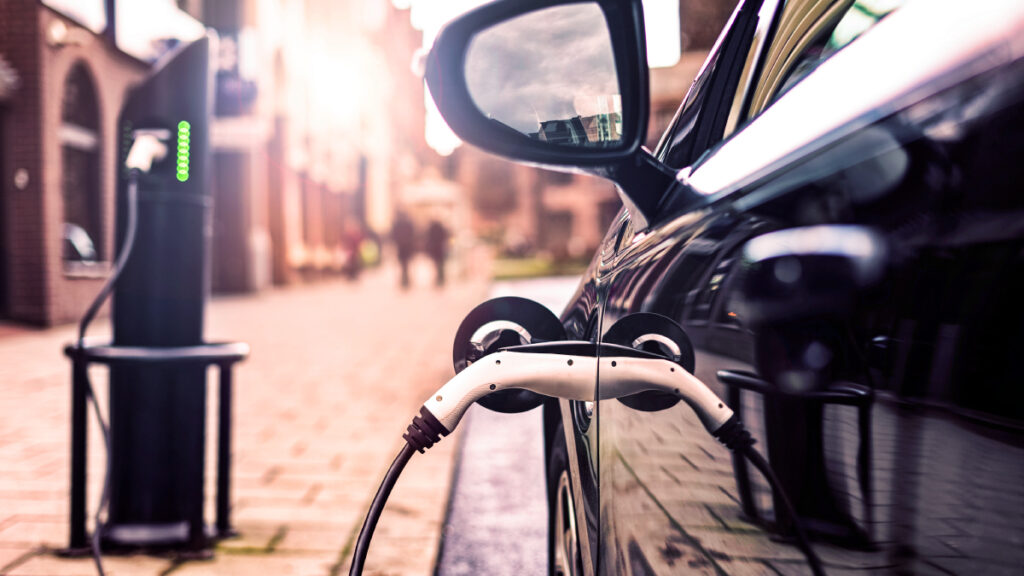
Once it has been seen that the electricity grid appears to be prepared for the deployment of electric vehicles, there are other aspects on which this transition of the mobility model depends, and one of them is the charging infrastructure.
Not to mention, that the charging infrastructure is still very limited, it is obvious. In Catalonia, and according to data from the ICAEN, only 126 of the 947 municipalities, just 13%, have no charging points at all; this is a very limiting figure if we want to invest in a massive deployment.
In this sense, it is necessary to consider what are the main obstacles that hinder this development.
-
- Technical limitations: An electric vehicle has a limited range. Moreover, electric technology, as of today, does not allow the same charging speed as that of a combustion engine vehicle. Filling a petrol tank to go about 500km (for an average consumption of 6l/100km, about 30 litres) can take a couple of minutes; with an electric vehicle, in the best case (with fast charging), it takes an hour and a half (for an average consumption of 15kWh/100km, about 75kWh). The energy density is also lower, which translates into less space in the vehicle.
- Increase in contracted power: Related to the previous point, betting on a fast charging network alone doesn’t make much sense, as it would overload this network excessively, which would mean an increase in costs, in addition to over-sizing lines and transformer stations for specific purposes. Slow charging on public roads for vehicles would not make much sense, as it would multiply the time users spend on the road excessively, when currently it is limited to a maximum of one hour or one and a half hours of stay.
- Technological evolution: Currently, autonomy is one of the weaknesses of EVs; therefore, enhancing fast charging points should seem to be a priority. But beyond the drawbacks mentioned in the previous point, and if technological evolution means that in 5 years’ time cars will already have 1000km of autonomy? Should we then invest in fast charging points? Perhaps only in strategic locations such as highways or communication hubs?
- Urban environment: The structure of buildings with community parking spaces makes it difficult to have a charging point in the parking space. Although the ITC-BT52 of the Low Voltage Regulation makes things easier in this regard, the reality is that it is complex to consider installing a charging point in these types of buildings. Aspects such as having to request permission from the community, the investment involved (especially if the space is not owned but rented), the technical complexity in many cases (lack of space, complicated layouts, etc.) and the lack of knowledge among users are all obstacles that are difficult to overcome.
- Ownership and management model: On the one hand, we find that Local Administrations, in a very commendable way, in order to favor the deployment of EVs, are installing charging points where electric energy is “gifted”. This fact is also linked to the complexity of the regulated electricity sector, which makes the figure of a market agent necessary to sell energy. Therefore, which private investor would want to invest in a charging network model where, in the short term, there is “unfair competition” because energy is being gifted? What charging network model should be adopted? Currently, the charging stations in conventional public spaces are in private hands, contrary to the charging network for EVs. How or who should promote the change in this management model?
- Regulatory framework: The fact that the electricity sector is in trouble is a reality; in recent years, the reform of the electricity sector law seems to have only just begun. In the short term, a deep reform of the Spanish electricity market is already foreseen, as the current system of marginal auctions increasingly highlights the cannibalistic effect of renewable energies on it and the need to structure local energy markets aimed more at compensating generation for technical rather than market reasons. On the other hand, the various European regulations published in 2019 that already include the concept of demand aggregators and that should be transposed before 2021 add further regulatory uncertainties that are quite incompatible with the definition of new business models in this area.
- Change of habits: Human behavior cannot be ignored as the cause of many failures in history. One of the most characteristic traits is stepping out of one’s comfort zone and changing habits. The transition to electric mobility involves the two aspects mentioned above. Today, driving an electric vehicle means changing models. One must plan each trip in advance to avoid problems with range and/or the charging network. Limited catalog of vehicles from manufacturers, “recharging” the vehicle very often as if it were a mobile device instead of once a week, limited range, higher purchase prices, etc. In short, “discomfort” in the short term and a change in habits.
- New models of mobility: In addition to all the aforementioned, there is still one final aspect that generates uncertainty: the constant transformation at the societal level that affects mobility models, especially in urban environments. The boom of sharing (cars, motorcycles, bicycles, etc.), access restrictions, the achievement of the Sustainable Development Goals (SDGs), etc., add further uncertainty. In fact, recently we have seen how a pandemic situation such as COVID-19 has promoted teleworking on a generalized scale, which will, in the short term, require rethinking the old face-to-face model and which seems to be putting a lot of pressure on the current mobility model.
Models of self-consumption and energy management, V2G model.
Given everything that has been said so far, it seems that a great deal of ingenuity is required to find a way to accelerate the development of the VE. It is precisely in technology that the necessary lever can be found to overcome some of the aspects mentioned above.
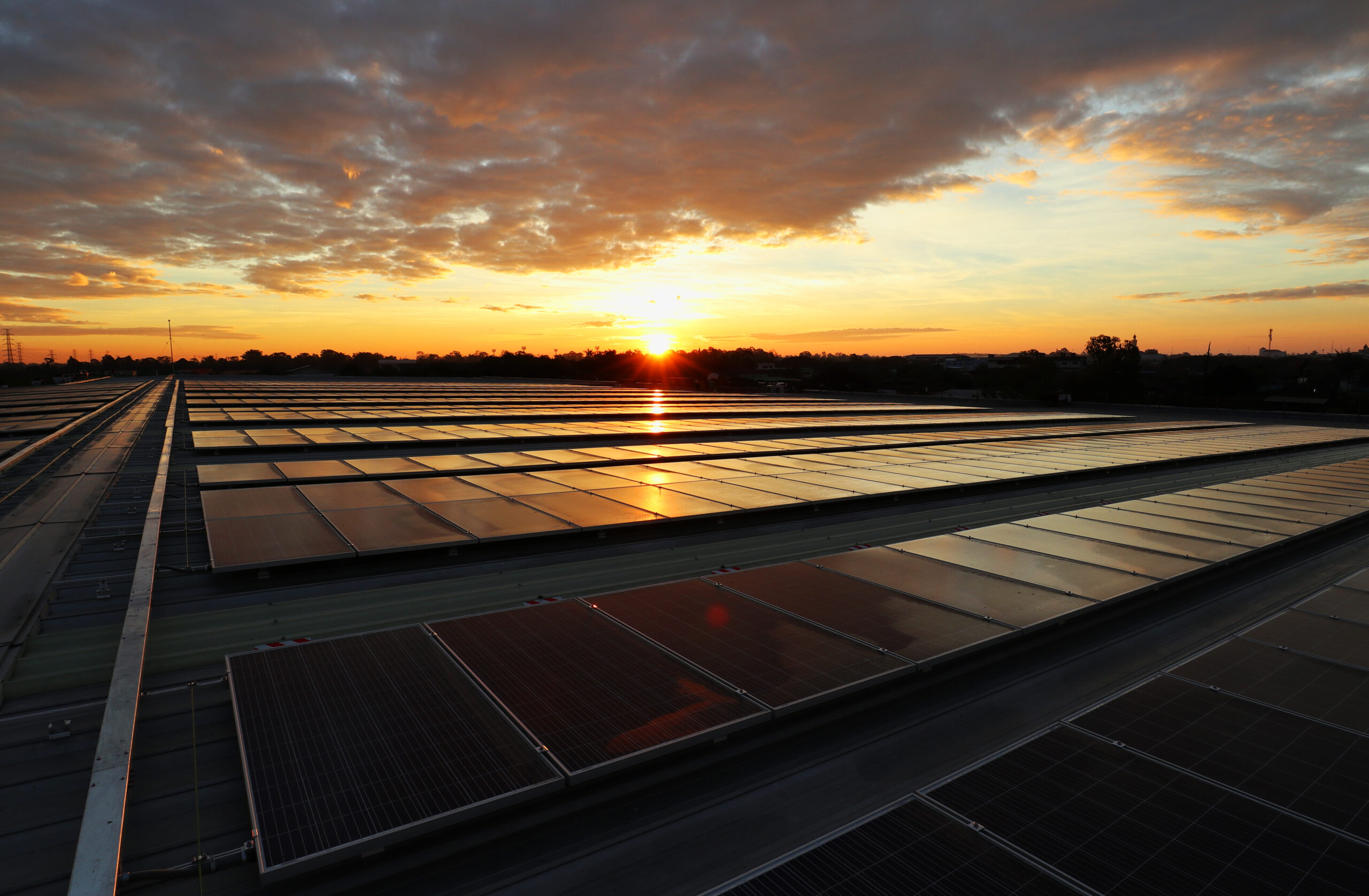
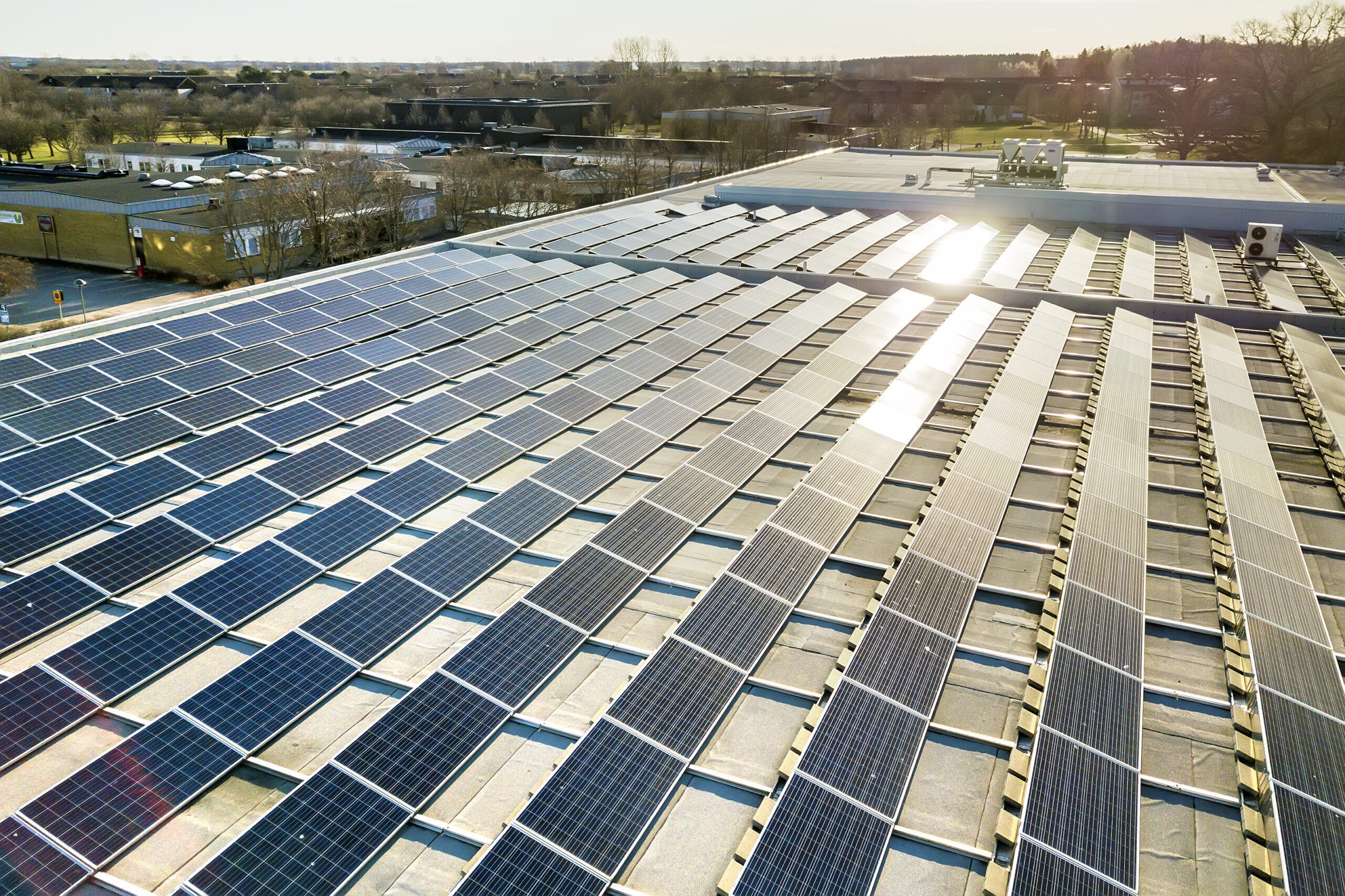
Currently, photovoltaic solar energy has the most competitive LCOE (Levelized Cost of Energy), so a distributed generation model based on this technology is key to supplying the charging infrastructure competitively and cleanly. Moreover, we are seeing new models of self-consumption, such as shared self-consumption, which mean that the design factor of these installations is no longer not generating excess energy (which greatly limits the percentage of individual needs to be covered), but rather the determining factor is the available space. In other words, installing all the power that can be generated and sharing the excess with those who can use it, with the compensations defined with the public network nearby, the neighborhood, or any potential nearby consumer.
On the other hand, the management of this energy is a critical point and intelligent load management systems are necessary to avoid over-sizing the grid. Moreover, the connectivity between the vehicle and the distribution network, the so-called V2G (Vehicle to Grid), must be a necessary condition to avoid excessive investments in the storage systems for the generated energy that could make these infrastructures unviable. Unfortunately, few vehicle manufacturers currently incorporate this capability of the vehicle to be managed externally, so this should be one of the main objectives.
Going into more detail about how to manage these mentioned infrastructures, it is necessary to reflect on the following:
- Do vehicles that use public road infrastructure always have to be charged regardless of their degree of autonomy and charging percentage?
- Should the stay of an EV that is plugged into the public grid be limited as it is now?
- What percentage of chargers should be fast or semi-fast charging?
- Would the owners be willing to be compensated for leaving their vehicles to manage the energy generated in nearby self-consumption facilities?
- Do the administrations have a roadmap that clarifies this deployment?
- Does the current regulation already cover the interconnection between the vehicle and the network, as well as the management and compensation mechanisms?
- How will the change in the public network model be made so that it can be implemented on a massive scale with investments from the private sector?
Therefore, there are still many issues to be resolved, not so much of a technological nature (which is also the case) but, above all, how to change the model. The different Public Administrations and the professional groups competent in these matters have a duty and responsibility to help promote private sector investments towards a sustainable and effective mobility model, where the use of EVs is not a whim but an indispensable element for managing the flexibility of the system.
Author: Ferran Garrigosa Carreras. Industrial Engineer and MBA, expert in business development and renewable energy.