The Energy Transition of Citizens
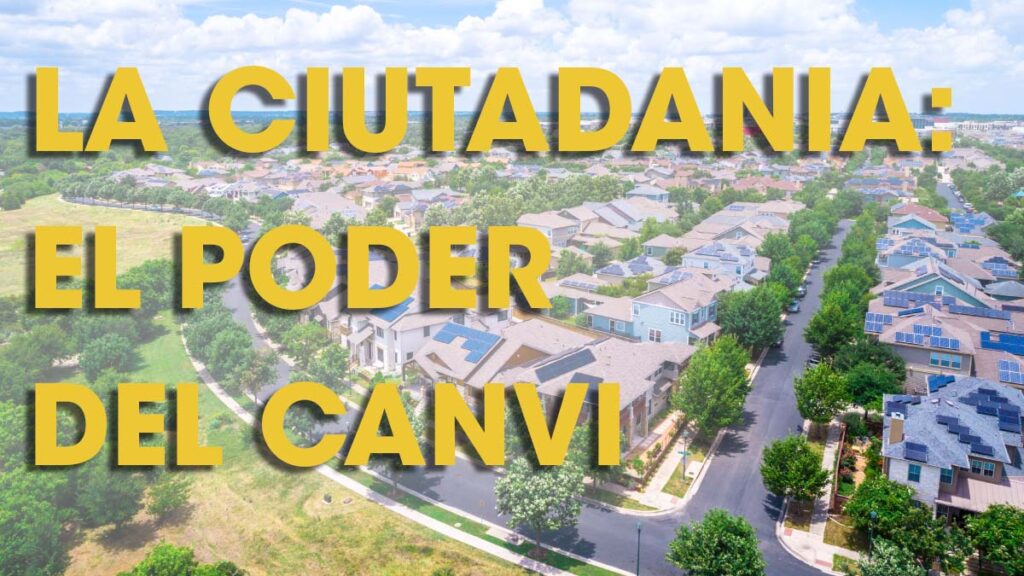
There is talk of an energy transition, but it must not only focus on technological issues; it must also include the necessary social change, which is essential to put citizens at the center of the energy system.
Technologies for harnessing the energy from renewable sources are mature, and photovoltaic technology in particular is simple and inexpensive to maintain.
The territory is the face of society, and the implementation of any kind of infrastructure. Energy infrastructure, among others, alters this face in a way that is often irreparable, which can clash with the will of those who inhabit that physical and intimately emotional space.
The global warming brought about by the current climate crisis compels us to take decisions to mitigate it, because we are on a path of self-destruction that has no end in sight. Scientific reports confirm that by 2028, average temperatures could exceed 1.5 degrees Celsius and enter a path of irreversible change.
It’s not about scaring people, but about being realistic and calling for action. The COVID-19 pandemic is being managed as a real emergency. The citizens accepted to be locked in their homes for three months. The authorities who decided this did not make any PowerPoint presentations; instead, they gave very clear orders, with immediate effect and with threats of sanctions.
In contrast, cities and organizations of all kinds declare a climate emergency. But the actions are limited, of slow implementation and with little dissemination due to a lack of public awareness. Without achieving the desired multiplier effect, and without getting people, as individuals, to feel involved.
If the option of citizens doing nothing were to be chosen, someone would take the opportunity to create new oligopolies in a scenario of renewable generation, but repeating the model of centralized generation dominated by large investors.
The European Commission makes available to us a new figure that will make it possible to put citizens at the forefront of the energy decisions of their municipality or neighborhood, which are the Local Energy Communities, also known as Citizen Energy Communities.
The European Directive on common rules for the internal market in electricity proposes municipalities as the driving force behind these initiatives, which must involve the active participation of a part of the public.
Europe has made great progress in liberalizing the electricity sector, forcing energy companies to have the different activities, such as generation, distribution and marketing, properly separated and avoiding conflict of interest and market dominance. In contrast, it gives the Local Energy Communities the ability to carry out all activities, defining them as follows:
Legal entity of Voluntary participation and whether it is effectively controlled by shareholders or its members are natural persons, local authorities, including the municipalities, or small businesses, The main objective of which it is to be offered environmental, economic or social benefits for its members or the locality where its activity takes place, Rather than generating financial profitability. A Citizen Energy Community can participate in the generation, including that from renewable sources, the distribution, the supply, the consumption, the aggregation, the energy storage, the provision of energy efficiency services, the provision of charging services for electric vehicles or other energy services to its shareholders or members.
Currently, we are already conducting CLE pilots in several Catalan municipalities, preparing the legal structure to make them possible and the technological deployment to activate them, since the key concept is’optimization for the benefit of all, That is, better prices for those who generate, cost reduction for those who use energy, and benefits for those who make their devices (batteries) available to the community.
Having reached this point, let us return to the beginning. Will citizens get involved and participate actively in these organizations? What should be the strategies to achieve this individual commitment in favor of the community?
Author: Santi Martinez. EExpert in energy policy and socio-economic impact.