
Potential flexibility in demand
One of the challenges we face in terms of renewable energy is maintaining a balance between the energy generated and the energy needed at any given time. In any electrical system, the system operator is responsible for maintaining this balance.
Since renewable energy sources are variable, the discrepancies between energy production and demand increase. Therefore, the electricity system will have to respond to the expected and unexpected changes that arise, and this will be achieved by managing the potential for flexibility of companies and households.
A clean, economical and efficient way to facilitate this balanced task is through the flexibility existing in demand (response to demand).
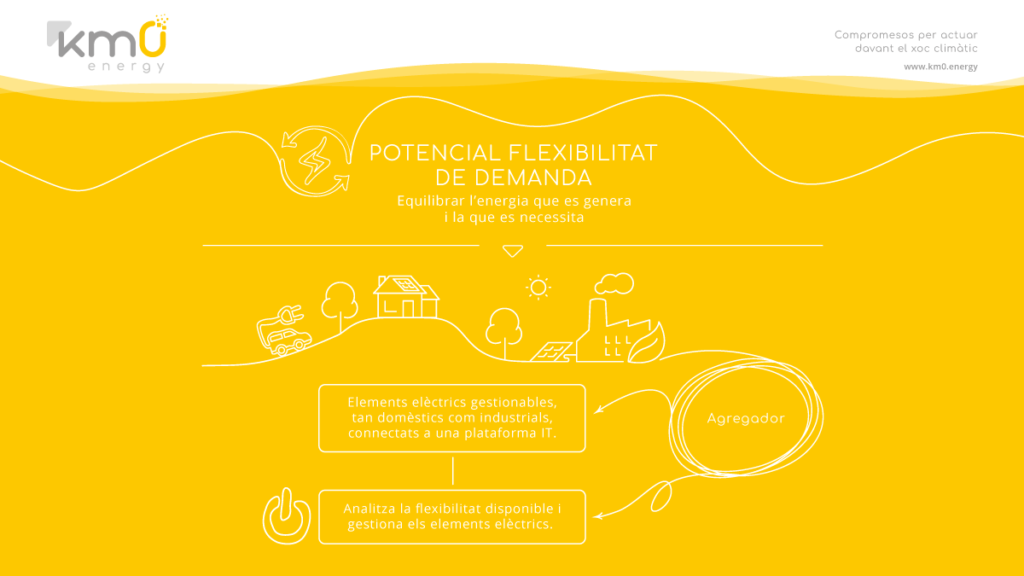
The application of demand response systems aims to adjust the energy needed by consumers to the needs of the network, disconnecting or reducing the electrical energy consumption loads during short periods of time. In other words, it involves: A variety of equipment with varying levels of flexibility (water heaters, ventilation systems, electric vehicles, industrial cooling facilities, air conditioning systems…), can balance this demand and production.
In order to reliably supply all the energy demanded by customers, the devices and machinery in different facilities must be connected to an IT platform. This platform analyzes the available flexibility and manages the instantaneous consumption of the devices. devices for short periods of time, when the electrical system requires them, with minimal impacts on their operation.
The platform manager (also known as the aggregator) receives an economic reward from the electricity system operator for providing this service, a reward that is partly passed on to the owners of the facilities that participate in responding to demand.
Since KM0 Energy We know that by combining the flexibility derived from demand and the generation of local electricity with renewable energy sources, it is possible to achieve a decentralized and local electricity system that is completely free of carbon dioxide emissions.